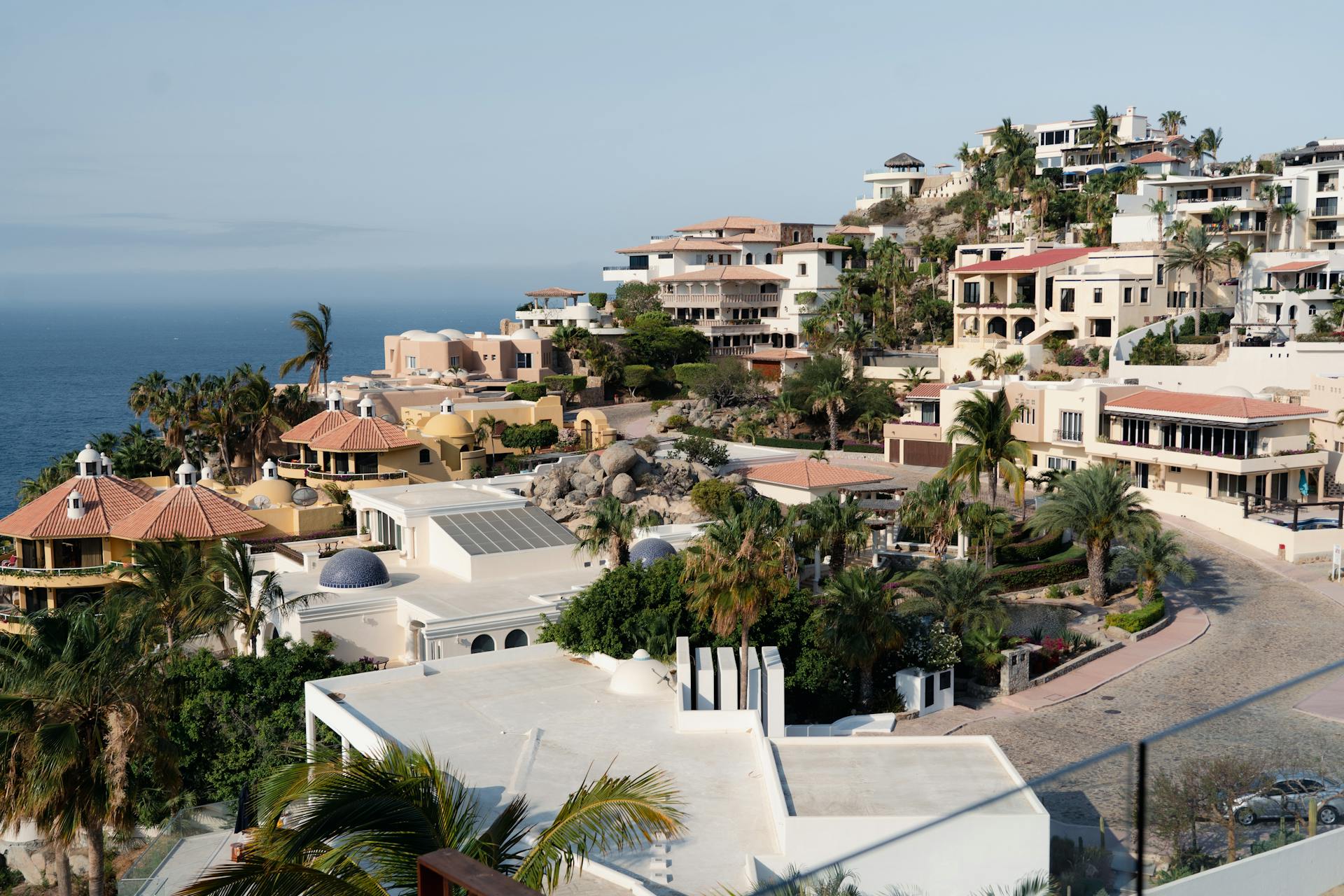
Tulum looks like one short-term rental market on a map. It does not run as one. The five submarkets where the inventory actually lives — Aldea Zama, La Veleta, Region 15, Tankah, and the Tulum Country Club — sit on different infrastructure, attract different guests, charge different rates, and require different operating models.
The properties that out-yield their submarket are run by operators who understand which submarket they are actually in. The ones that underperform are run on a single playbook regardless.
This is the working comparison.
Why Tulum is not one market
The shorthand “Tulum” covers a coastal town, a beach-road hotel zone, three distinct inland development zones, a coastal-jungle corridor running north toward Akumal, and a golf-anchored development further north along Federal Highway 307. The geography spans roughly thirty kilometers, with the inland submarkets clustered in and around Tulum proper, Tankah running north along the coast, and the Bahia Principe / “Tulum Country Club” complex sitting further north in the Akumal corridor.
Each submarket developed on a different timeline, under different planning frameworks, and with different infrastructure baselines. The operational implications are concrete:
- Road condition and rainy-season access vary by submarket.
- Utility reliability — water, electrical, internet — varies by submarket.
- Walkability and proximity to retail or dining vary by submarket.
- Build quality, HOA structure, and short-term rental governance vary by submarket.
- The guest profile that books each submarket varies by submarket.
A Tulum short-term rental management framework that does not recognize these differences is operating in a generalized version of the city. The yield differential between properties of similar headline specs across these five submarkets is meaningful.
Our Tulum short-term rental management framework calibrates the operating model to the submarket, not the other way around.
Aldea Zama
Aldea Zama is the master-planned mixed-use community sitting roughly halfway between Tulum’s town center and the beach road. It was developed under a single planning framework with paved internal roads, walkable streets, a central retail-and-dining plaza, and a relatively uniform building-quality baseline.
Inventory. Condo-heavy, with a smaller share of villas and townhouses. Most buildings are 3–5 stories with pool amenities, gym infrastructure, and rooftop terraces. The unit mix runs 1- to 3-bedroom layouts with a smaller pool of larger penthouses.
Demand profile. Investor-driven mid-stay weight. Guests are typically here for 4–10 nights, with strong representation from U.S., Canadian, and European travelers in the 30–55 age range. The Aldea Zama Plaza retail concentration produces walkable food-and-beverage demand that other submarkets cannot replicate.
Infrastructure. The strongest in inland Tulum. Paved roads, more reliable utilities, established internet infrastructure across most buildings, and consistent garbage and water service.
HOA and STR governance. Aldea Zama has the most developed condo-regime infrastructure in inland Tulum. Buildings have HOAs with documented rules, maintenance fees, and short-term rental protocols. Reviewing the specific condo regime before listing is part of standard onboarding, but the framework exists at every property.
Operating model. Standard condo turnover protocol applies. Cleaning crews are widely available. Vendor networks are mature. The operating cost per turnover is among the lowest in Tulum because the infrastructure does not require specialty handling.
La Veleta
La Veleta sits closer to downtown Tulum, north of Aldea Zama, and runs on a different operational profile. It is the boho-aesthetic submarket that drove much of Tulum’s design press cycle from roughly 2018 onward.
Inventory. Mixed villas, boutique condo developments, and smaller townhouse projects. Build quality is more variable than Aldea Zama — some developments are strong, others are weaker. The aesthetic skews jungle-immersive rather than mixed-use master-planned.
Demand profile. Younger guest mix than Aldea Zama. Stronger representation from design-aware travelers, digital-nomad longer stays (14–30 nights), and the Tulum-aesthetic-driven leisure flow that anchored the submarket’s growth.
Infrastructure. More variable than Aldea Zama. Some streets are paved, others are not. Utility reliability depends on the development. Internet bandwidth varies meaningfully between properties. Rainy season can affect road access in lower-lying sections.
HOA and STR governance. Mixed. Some boutique developments run well-governed HOAs with documented STR rules. Others have minimal HOA structure and rely on individual-owner discretion. The variation matters for compliance and for resale.
Operating model. Vendor relationships are essential. The operating cost per turnover is higher than Aldea Zama for properties with infrastructure variability. Pricing should reflect the property’s specific infrastructure baseline rather than a generalized La Veleta rate band.
Region 15
Region 15 sits between La Veleta and the beach corridor — roughly 2–4 km inland — in a development zone that opened more recently than Aldea Zama or La Veleta. It is villa territory — larger lot sizes, lower density, and a jungle-immersive operating environment.
Inventory. Villa-dominant. Lot sizes generally larger than the inland condo zones. Pool-and-garden focus. Higher absolute price points for the well-built inventory but with significant variation in build quality between projects.
Demand profile. Group travel, family trips, multi-couple bookings, and longer stays (7–14 nights typical). Strong fit for guests prioritizing privacy and outdoor living over walkability. International guest mix is meaningful — U.S., Canadian, and European.
Infrastructure. This is where operational discipline matters most. Region 15 sits in a jungle-development zone where water, electrical, and road infrastructure are still maturing. Some lots have strong infrastructure baselines; others do not. Rainy-season access can affect arrivals and departures. Internet bandwidth requires property-by-property verification. Backup power and water-system monitoring are operationally relevant for the higher-end inventory.
HOA and STR governance. Region 15 skews toward villa-by-villa governance. There are exceptions — some master-planned villa developments have HOAs and rules — but the baseline is less centralized than Aldea Zama or the Country Club.
Operating model. Villa-format operations. Specialty vendor networks for water systems, electrical reliability, and pool-and-garden maintenance scale. Operating costs are higher than condo equivalents, but the rate band on the well-positioned properties supports them.
Tankah
Tankah is the coastal-jungle corridor north of Tulum proper, running along the highway toward Akumal. It is cenote-rich, lower-density, and operationally distinct from any of the inland submarkets.
Inventory. Villa-dominant, with cenote and beachfront properties on the higher end. Larger lots, jungle integration, and direct access to Caribbean cenotes are part of the value proposition.
Demand profile. Family trips, multi-generational bookings, and group leisure travel. Average stays trend longer than Aldea Zama or La Veleta — often 7–14 nights, sometimes longer. Guests are typically prioritizing privacy, nature access, and group accommodation over walkability.
Infrastructure. Off-grid considerations are real. Many properties run on well water with septic systems. Electrical service can interrupt during peak grid load. Internet is property-specific rather than universal. Backup power, water monitoring, and guest-communication protocols for service interruptions are part of standard operating scope.
HOA and STR governance. Mostly villa-by-villa. Some developments have community associations; many do not. Operations are more individualized than in master-planned submarkets.
Operating model. Specialty vendor networks. Documented off-grid protocols. Rate bands on well-positioned cenote and beachfront villas can support operating costs that would be prohibitive at smaller properties. Tankah is the submarket where operating discipline produces the largest yield differential.
Tulum Country Club
“Tulum Country Club” is the marketing identity used by residential and rental properties within and adjacent to the Bahia Principe Riviera Maya development in the Akumal corridor — roughly 30 minutes north of Tulum proper along Federal Highway 307. It runs on a different operating model than any of the inland or northern submarkets.
Inventory. Single-family villas and a smaller pool of condo-format units. Built within and around a master-planned gated complex with uniform architectural standards. The broader development is anchored by the PGA Riviera Maya by Bahia Principe — a 27-hole course designed by Robert Trent Jones II that opened in 2010 — along with beach-club access, internal road infrastructure, and security.
Demand profile. Longer average stays than the inland submarkets — often 7–14 nights with stronger weighting toward family travel, golf-oriented bookings, and multi-generational trips. Guests typically prioritize amenity access (golf, beach club, pool, security) over walkability to downtown Tulum.
Infrastructure. The most uniform in greater Tulum. Paved internal roads, consistent utilities, established security and maintenance, and clear governance. Internet infrastructure is community-grade rather than property-specific.
HOA and STR governance. Strong. The community has documented rules governing short-term rental, signage, guest access, and amenity use. HOA fees are higher than inland submarkets because the infrastructure is more comprehensive, but the predictability is also higher.
Operating model. Long-stay-weighted operations. Coordinated with community-association protocols. Vendor access requires community check-in for some service categories. Operating costs include community fees in addition to standard utilities and management. The rate band supports them when the operating model is calibrated to the demand profile.
What carries across all five
Some operating elements are constant regardless of submarket. Mexican federal tax compliance — RFC registration, SAT reporting, IVA — applies everywhere. Quintana Roo state lodging tax applies everywhere. Foreign owners operating through fideicomiso face the same trust-documentation requirements regardless of which submarket the property sits in. Bilingual guest communication is operational baseline across the city.
The two-speed seasonality also holds across all five. Peak season (mid-November through mid-April) compresses demand citywide. Shoulder season requires active rate management. The peak-to-shoulder ratio varies by submarket — Aldea Zama tends toward a flatter curve because of its mid-stay investor demand, while villa-format submarkets like Region 15 and Tankah show steeper compression — but the shape is universal.
What does not carry across is the playbook for operations, vendor coordination, infrastructure handling, and guest expectations. A condo turnover in Aldea Zama is one operation. A villa turnover in Tankah with off-grid considerations is a different operation. A golf-community villa turnover at the Country Club is a third. The operator who runs all three on the same protocol underperforms in at least two of them.
Matching the property to the operating model
For owners evaluating Tulum short-term rental management options, the question is not which submarket is best in the abstract. The question is whether the operator running the property recognizes which submarket it is actually in and runs the operating model that submarket requires.
A condo in Aldea Zama running on a master-planned-condo protocol performs to its potential. A villa in Tankah running on the same protocol does not. The reverse is also true — a villa-format protocol applied to an Aldea Zama condo over-resources the operation and erodes the net yield.
Tulum’s submarket diversity is a feature for operators who recognize it and a vulnerability for those who do not. The properties that out-perform their submarket are run by teams that calibrate locally and run the four operational invariants — pricing discipline, turnover protocol, compliance ledger, owner reporting — consistently across all five.
The operating standard is not different by submarket. The operating model is.
This article describes typical operating characteristics of Tulum’s principal short-term rental submarkets as of April 2026. Specific HOA, condo regime, and POA rules; tax treatment; fideicomiso requirements; and infrastructure conditions vary by property and are subject to change. Owners and prospective buyers should verify current rules and conditions with a qualified Mexican attorney, a Mexican tax accountant, the relevant HOA or community association, and the bank trustee for their specific situation. Nothing in this article constitutes legal, tax, or investment advice.