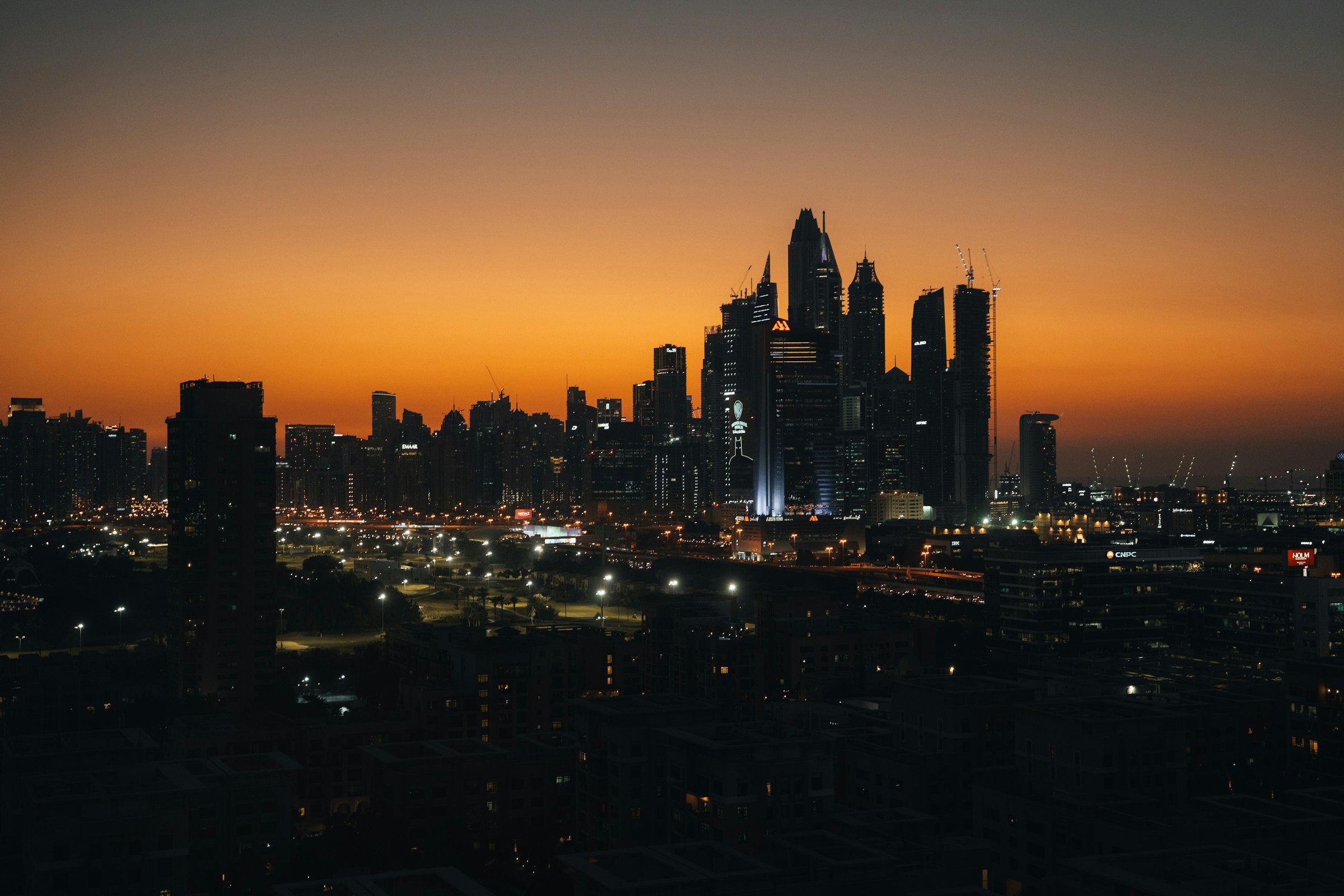
Dubai Short-Term Rental Management Operates Under Different Rules Than Every Other Luxury Market
Dubai's short-term rental market is built on a structural foundation that most international markets cannot replicate. Foreign nationals hold full freehold title in designated zones — Dubai Marina, Palm Jumeirah, Downtown Dubai, the Dubai International Financial Centre, Jumeirah Beach Residence, and Business Bay — without the nominee arrangements or beneficial ownership structures required for foreign investment in Mexico or Southeast Asia. That ownership is direct, titled, and accompanied by the right to generate short-term rental income.
The regulator is the Dubai Department of Economy and Tourism, operating through its DTCM holiday home licensing framework. Every property listed for short-term rental in the emirate requires a permit issued at the unit level. This is not a market in which informal hosting coexists with professional management — the licensing requirement applies universally and enforcement has tightened through 2023 and 2024.
Demand runs on two distinct cycles. Leisure and international tourism dominate October through April, when Dubai's climate draws visitors from Europe, South Asia, Russia, and across the GCC. Summer months compress occupancy for purely leisure-positioned properties, but corporate and business travel from DIFC's financial sector provides a demand floor that more seasonal markets cannot access. Properties positioned for both audiences — layouts that work for families in peak season and executives on extended stays — carry materially better year-round occupancy profiles than single-audience assets.
The investor base that owns these properties is overwhelmingly absentee and international. European buyers, South Asian investors, and GCC nationals acquired at scale during the 2020–2023 capital inflow period. Most are not based in Dubai and cannot manage guest operations themselves. That is the management gap Virestia is structured to fill.
DTCM Holiday Home Compliance Is the Operating Condition, Not a Line Item
Every property listed for short-term rental in Dubai requires a DTCM Holiday Home permit. The permit is unit-specific — it attaches to the property, not the operator or the owner. Virestia manages the permit application, documentation, and renewal process as part of onboarding. Owners should not list a property before the permit is issued.
The DTCM classifies properties across standard, deluxe, and luxury tiers. Classification affects permit fees, inspection requirements, and the listing category on compliant platforms. Airbnb, Booking.com, and other major platforms have embedded DTCM permit number requirements into listing metadata. Properties without valid permits are subject to delisting.
This compliance layer is not friction. It is the mechanism by which Dubai maintains STR quality standards in its most competitive residential zones — and it is a primary reason that well-positioned, permitted properties in Dubai Marina and Palm Jumeirah hold ADR at levels that comparable beach markets cannot sustain. Legitimate permitting is a supply constraint that protects owners already in the market.
Dubai's STR Market Is Not Uniform — Neighborhood Selection Determines Yield Profile
Dubai contains several distinct short-term rental sub-markets operating under the same regulatory umbrella but with materially different demand drivers, guest profiles, and pricing dynamics. Properties in the same emirate can perform at very different levels depending on which zone they occupy.
Dubai Marina
High-density waterfront zone with strong short-stay demand from leisure travelers and Gulf business visitors. The Marina Walk and proximity to JBR anchor consistent foot traffic. Studio to 3BR apartments are the dominant STR asset class. Extended-stay demand is growing as the area attracts regional corporate relocations.
Palm Jumeirah
The emirate's most recognizable address. ADR for Frond villas and Crescent apartments reflects both supply scarcity and the enduring draw of the address itself. The investor profile skews toward trophy asset buyers — acquisitions where the address is the thesis.
Downtown Dubai
Mixed leisure and corporate demand anchored by Burj Khalifa proximity. Branded residences and 1–3BR apartments dominate. Conference and event traffic from the Dubai World Trade Centre and the legacy of Expo 2020 infrastructure creates demand spikes that a well-positioned property can capture on top of baseline occupancy.
DIFC
Corporate-dominant. Extended stays from finance, legal, and consulting sector professionals provide a demand floor that is largely insulated from seasonal compression. Executive-grade 1–2BR apartments command strong midweek occupancy. The right choice for investors whose thesis is yield consistency over peak-season ADR spikes.
Jumeirah Beach Residence
Direct beach access combined with a walkable retail and dining corridor generates strong repeat-guest rates — unusual in the Dubai STR market. Family and leisure demand is the primary driver. Properties positioned for families outperform studios and single-occupancy units here.
Business Bay
Emerging STR zone with lower entry cost than Marina or Downtown. Corporate demand from DIFC spillover provides a growing occupancy base. Supply has increased rapidly and yield compression is more pronounced here than in established zones — asset selection matters more in Business Bay than almost anywhere else in the market.
What Onboarding a Dubai Property With Virestia Looks Like
Property Evaluation
Before onboarding, Virestia reviews the property against current ADR and occupancy benchmarks for its zone. DTCM tier classification, layout, and furnishing standard are assessed. Properties that do not meet the threshold for Virestia's managed inventory are declined at this stage — owner time and ours.
DTCM Permit Coordination
Virestia manages the Holiday Home permit application on the owner's behalf. Documentation requirements vary by property type and classification tier. Full onboarding — permit application through listing launch — typically runs four to six weeks, contingent on DTCM processing times.
Platform Launch
Professional photography, platform listing creation across Airbnb and Booking.com, dynamic pricing configuration using market comp data, and channel management setup. The property goes live only after the DTCM permit is confirmed.
Ongoing Operations
Co-host partner handles all on-the-ground guest operations — check-in coordination, maintenance, housekeeping, local compliance. Owners receive monthly net yield reporting in AED and USD. No salaried local staff overhead is passed to the owner.
Dubai Short-Term Rental Management — Common Questions
Every property offered for short-term rental in Dubai requires a DTCM Holiday Home permit issued at the unit level — not the operator level. Virestia manages the application and renewal process as part of onboarding. Properties listed without a valid permit are subject to platform delisting and regulatory penalty.
Yes, within designated freehold zones. Dubai Marina, Palm Jumeirah, Downtown Dubai, DIFC, and Jumeirah Beach Residence are among the areas where foreign nationals hold full freehold title. Short-term rental rights accompany that ownership, subject to DTCM licensing.
Virestia charges 20% of gross rental revenue. A one-time onboarding and setup fee applies at the start of the engagement. No salaried staff overhead is passed to the owner — Virestia operates on a co-host partner model that keeps operational costs lean.
Virestia places vetted on-the-ground co-host partners in each market to handle physical guest services, maintenance, and local compliance. Owners receive centralized reporting regardless of their home country or time zone. The model was built for international, absentee investors — it is not an adaptation of a locally-oriented management structure.
Dubai Marina and Palm Jumeirah lead on ADR for residential listings. DIFC drives the most consistent corporate and extended-stay occupancy, with less seasonal variance than leisure-dominant zones. Jumeirah Beach Residence benefits from strong repeat guest rates driven by beach access and walkability. Business Bay is an emerging zone with lower entry cost but more acute supply pressure.
The UAE imposes no income tax on rental revenue and no capital gains tax on property. Owners remain responsible for their home-country tax obligations on UAE-sourced income. Virestia provides gross and net revenue reporting in AED and USD to support owner accounting.
Full onboarding — DTCM permit application, photography, platform listing creation, and pricing configuration — typically runs four to six weeks. DTCM processing times are the primary variable. Properties go live only after the permit is confirmed.
Premium properties in established freehold zones — Marina, Palm Jumeirah, Downtown, DIFC — have maintained ADR through supply growth because location scarcity acts as a natural constraint. Mid-market supply in Business Bay and outer zones has increased more rapidly and is experiencing more yield compression. Asset selection at acquisition determines STR performance as much as management quality does.
Dubai's regulatory framework (DTCM) replaces Mexico's SAT and ISH compliance layers but serves the same function: legitimate, verifiable operations that protect the owner's asset and listing status. The UAE's zero-income-tax structure and USD-pegged currency remove variables that require active management in peso-denominated markets. The co-host model and yield reporting structure are consistent across Dubai, Tulum, and Los Cabos.