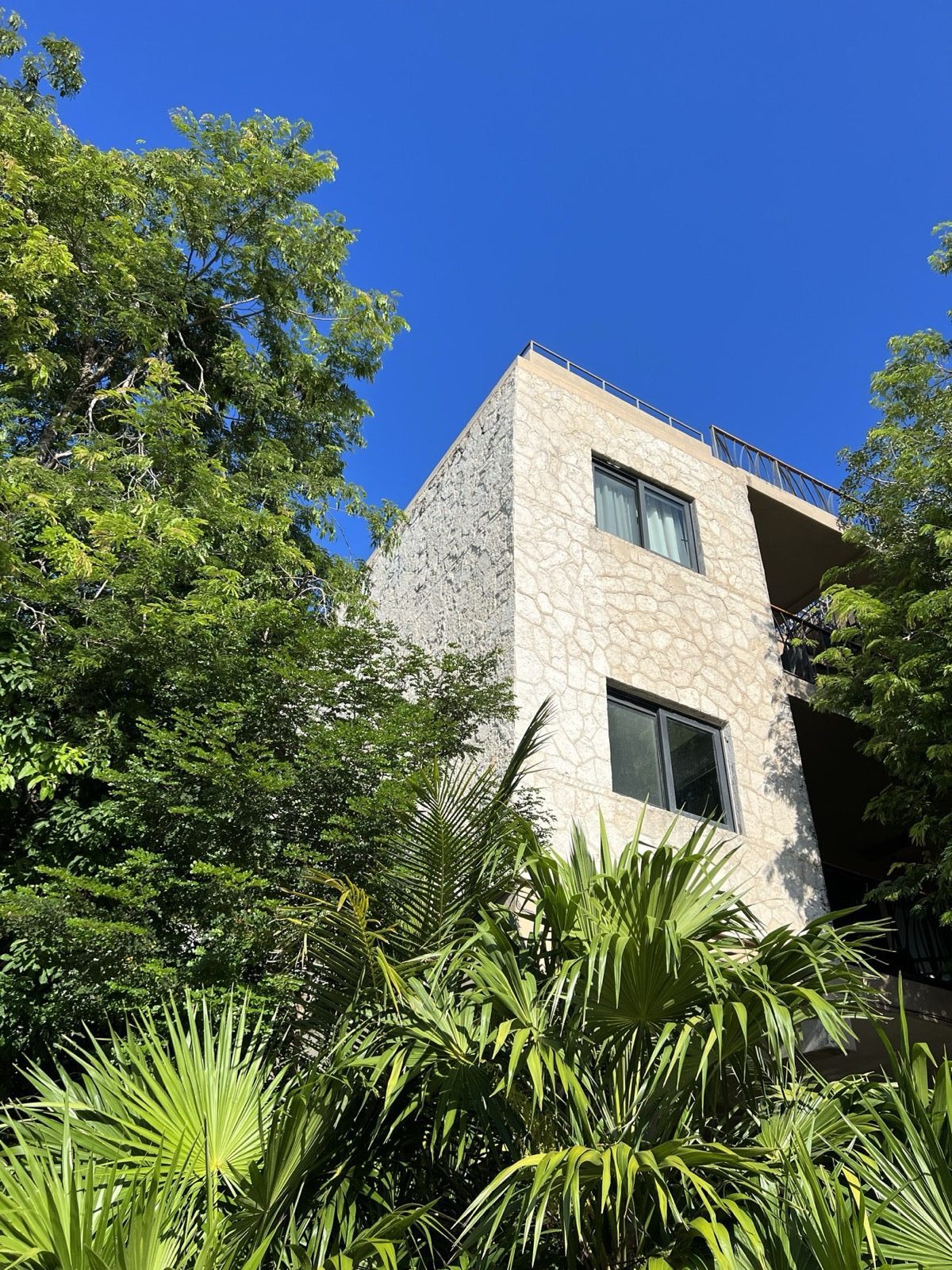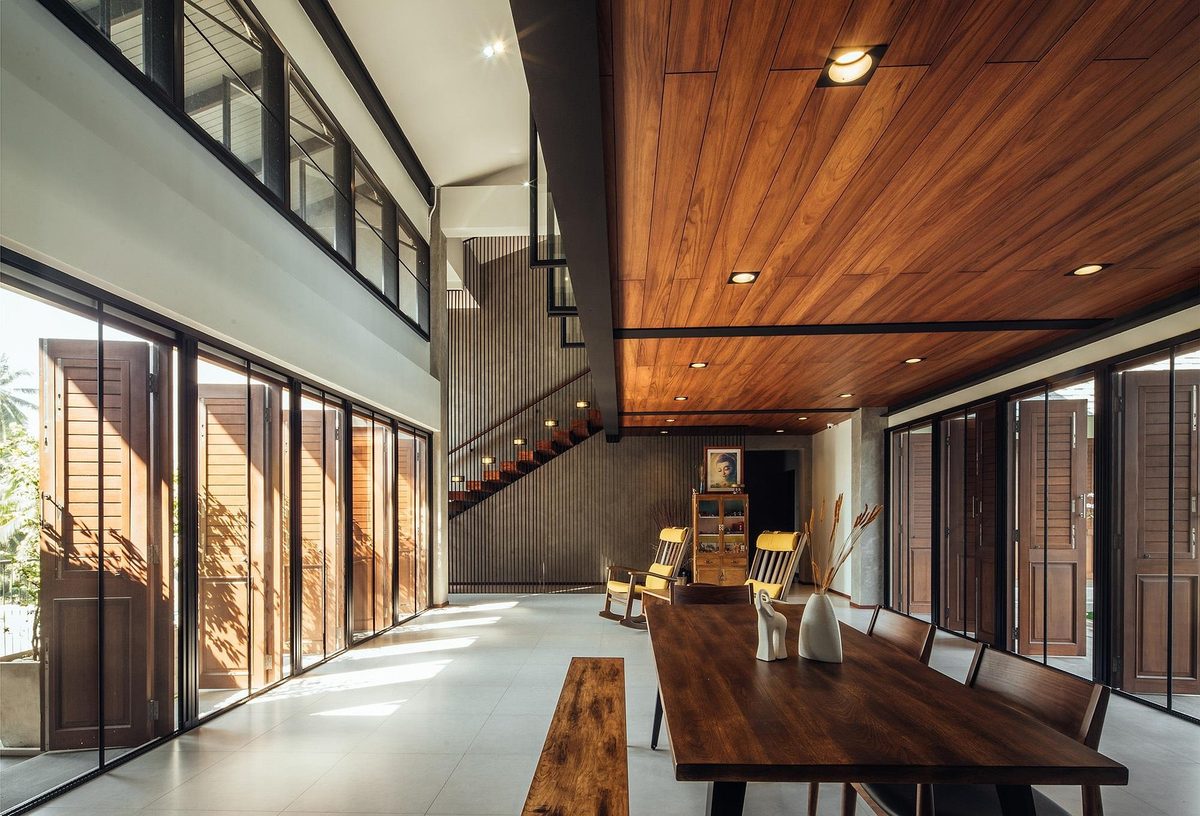
A 6-bedroom coastal estate with a commercial pool system costs $840 or more per month in electricity during summer — just to sit empty. Not to host guests. Not to generate revenue. To prevent the asset from destroying itself.
That number surprises most investors. It shouldn’t. In high-humidity, storm-prone markets, a significant portion of operating expenses exist to preserve the physical asset, not to service guests. These costs don’t appear in temperate-market pro formas. They don’t scale with occupancy. And they are the primary reason that coastal luxury STRs carry a fundamentally different expense structure than inland properties at comparable price points.
We broke down the full operating expense stack in a previous analysis — the 40–55% of gross revenue that most investor models undercount. This report isolates the cost categories that are unique to coastal and tropical environments: the line items that separate a Miami waterfront, a Tulum jungle estate, and a Houston bayou compound from a mountain lodge or a downtown high-rise.
Electricity as asset preservation
In tropical and Gulf Coast climates, the HVAC system is not climate comfort. It is structural defense.
Large-format estates require commercial-grade systems running continuously at sub-70°F setpoints — not for guest comfort, but to hold indoor relative humidity below 55%. Above that threshold, high-end millwork warps. Hardwood floors cup. Mold colonizes interior cavities behind walls where it’s invisible until remediation costs reach six figures. These systems run whether the property is occupied or vacant. They are not discretionary.
Based on portfolio data across peak summer months, baseline electrical loads scale predictably by footprint:
- 3-bedroom estates: ~$350/month
- 4-bedroom estates: ~$400/month
- 5-bedroom estates: ~$550/month
- 6+ bedroom compounds: $700+/month
Heated pools, commercial hot tub systems, and deep-water dock power add 20–30% to each tier. A 5-bedroom estate with a heated pool and dock doesn’t cost $550 per month. It costs $660–$715.
These benchmarks are built into our investment underwriting tool — input an acquisition price and see how each expense line impacts net yield.
These are summer peaks, but the annual curve matters for financial modeling. Winter baselines in Miami and Houston drop roughly 35–40%, but never to zero — humidity control is a year-round requirement in subtropical climates. In Tulum, the seasonal variance is narrower; high heat and humidity persist 10 months of the year, compressing the relief window to 6–8 weeks.
The critical framing for investors: any pro forma that models utilities as a percentage of revenue is structurally wrong for coastal assets. These are fixed costs. They exist at zero occupancy. An operator who doesn’t build them into dynamic pricing floor rates is subsidizing asset preservation out of margin — and the owner may not realize it until the year-end P&L arrives.
Accelerated mechanical depreciation
Salt air corrodes. Sustained heat degrades. Coastal and tropical environments destroy mechanical infrastructure on a compressed timeline that inland operators have never encountered.
An HVAC compressor rated for 15 years in the Midwest may last 6 in Miami. Along the Riviera Maya, where salt-laden Caribbean air combines with jungle humidity, the timeline compresses further. In Los Cabos, the wear curve is different — desert UV and Pacific salt without the humidity — but the refresh cycle on exterior finishes, pool equipment, and outdoor textiles still runs on a Baja-specific cadence that inland operators underestimate. Pool pump motors corrode. Exterior electrical panels pit. Plumbing fixtures in salt-air environments fail at 2–3× the rate of identical components 50 miles inland.
The operational response is not reactive repair. It is a scheduled preventative calendar:
- Monthly: HVAC condenser flushes, coil treatments, refrigerant checks
- Weekly: Commercial-grade pool chemistry balancing, surface skimming, filter cycling
- Quarterly: Plumbing snake/scope inspections, water heater anode checks
- Semi-annual: Electrical panel assessments, exterior fixture replacement, roof flashing inspection
The math justifies the schedule. A $400 quarterly condenser flush prevents a $6,000 compressor replacement. A $150 weekly pool chemistry service prevents a $12,000 replastering. A $200 semi-annual anode rod swap prevents a $3,500 water heater failure during a holiday booking.
This is not an expense category to optimize downward. It is an insurance premium against two simultaneous risks: catastrophic repair costs and refunding a displaced $15,000 reservation when a system fails mid-stay. In coastal markets, the preventative maintenance line runs 2–3× what you’d budget for a comparable inland property — and cutting it is the most expensive decision an owner can make.
Coastal insurance: the accelerating line item
For $3M+ coastal properties, insurance has become one of the fastest-moving expense categories in the operating stack — and one of the least predictable.
Wind and flood premiums in South Florida have escalated aggressively since 2022, driven by carrier withdrawals from the state and reinsurance repricing. A waterfront estate in Miami-Dade that carried $15,000 in annual wind/flood coverage three years ago may now face $25,000–$35,000 for equivalent limits — if coverage is available at all through private markets. Properties that fall back on state-backed options face coverage caps that leave significant exposure on a $3M+ asset.
In Tulum, the insurance landscape is structurally different. Coverage options for foreign-owned properties are limited, and the policies that do exist often exclude hurricane damage or carry deductibles that render them functionally decorative. Operators in this market must account for self-insurance risk — the practical reality that storm damage recovery may come out of operating reserves, not a claims process.
Houston’s Gulf Coast exposure creates a third variant: properties outside federal flood zones may carry manageable premiums, but a single reclassification after a major storm event can triple the annual cost overnight. The 2017 post-Harvey remapping is the case study every Houston investor should model against.
For investors underwriting coastal acquisitions, insurance is no longer a stable line item to plug in and forget. It is a variable that requires annual reassessment — and an operator who doesn’t flag premium changes proactively is hiding margin compression.
Exterior curation as a rate driver
For a property commanding $1,500–$5,000 per night, curb appeal is not aesthetic preference. It is a revenue variable.
Tropical and coastal vegetation grows aggressively. Left unmanaged for two weeks, a $4M waterfront estate starts to look neglected — and listing photos don’t update themselves. Weekly manicuring, palm frond removal, pest mitigation, and hardscape pressure washing are baseline requirements, not seasonal enhancements. The editorial-quality exterior in the listing photos must exist 52 weeks a year, not just the week of the photo shoot.
Each market has a distinct exterior maintenance thesis. In Tulum, jungle overgrowth combined with Caribbean salt air creates a degradation cycle that has no domestic equivalent — operators who price exterior maintenance at U.S. suburban rates will watch the property and the listing performance deteriorate within a single season. In Miami, salt spray on waterfront properties corrodes exterior metalwork, stains facade materials, and requires a pressure washing cadence that inland properties never need. In Houston, the challenge is different: dense subtropical vegetation and standing water after heavy rains create pest pressure — mosquitoes, fire ants, invasive species — that requires active mitigation, not just mowing.
Our Tulum short-term rental management and Houston short-term rental management teams calibrate exterior maintenance cadence to each market’s specific environmental load — not a generic checklist applied across geographies.
Climate-driven revenue displacement
Storms and hurricane seasons present a cost that most pro formas ignore entirely: unrealized revenue.
The direct costs are line items — estate securing, shutter coordination, post-storm debris clearing, landscape restoration. They’re quantifiable and manageable. But the larger financial impact is booking displacement. September and October storm windows don’t just create cancellations. They suppress demand. Guests don’t cancel and rebook later. They book a different market entirely.
Two operators on the same street will report materially different annual revenue based on how they price around this displacement. One prices the calendar uniformly and absorbs storm-season gaps as pure loss. The other structures the entire annual pricing strategy around the climate pattern: aggressive, event-driven premiums during Art Basel, Formula 1 weekend, Spring Break, and Houston Medical Center conference windows that mathematically offset the inevitable September-October trough.
The high-season rate premium is not margin maximization. It is the funding mechanism for predictable revenue gaps. For investors modeling annual yield, the question is not “what’s the nightly rate?” It is “what is the annualized revenue net of predictable displacement — and does the operator’s pricing strategy account for it before the storm window opens, not after?”
The operator as the margin variable
Every cost in this report is knowable. Every cost is manageable. None of them manage themselves.
The difference between a coastal luxury asset that delivers the yield gap and one that underperforms its traditional lease alternative is not the property. It is not the market. It is whether the operator on the ground treats these expenses as a system to be optimized or a set of invoices to be paid.
Utility loads baked into pricing floors protect margin instead of consuming it. Preventative maintenance executed on a calendar — not in response to a guest complaint — preserves mechanical systems and prevents catastrophic repair events. Insurance reviewed annually, not at renewal. Pricing calibrated to climate patterns, not calendar defaults.
For absentee owners of $3M+ coastal real estate, every line item in this report is a question to ask the operator managing the asset. The specificity of the answers will tell you more about expected returns than any pro forma projection.