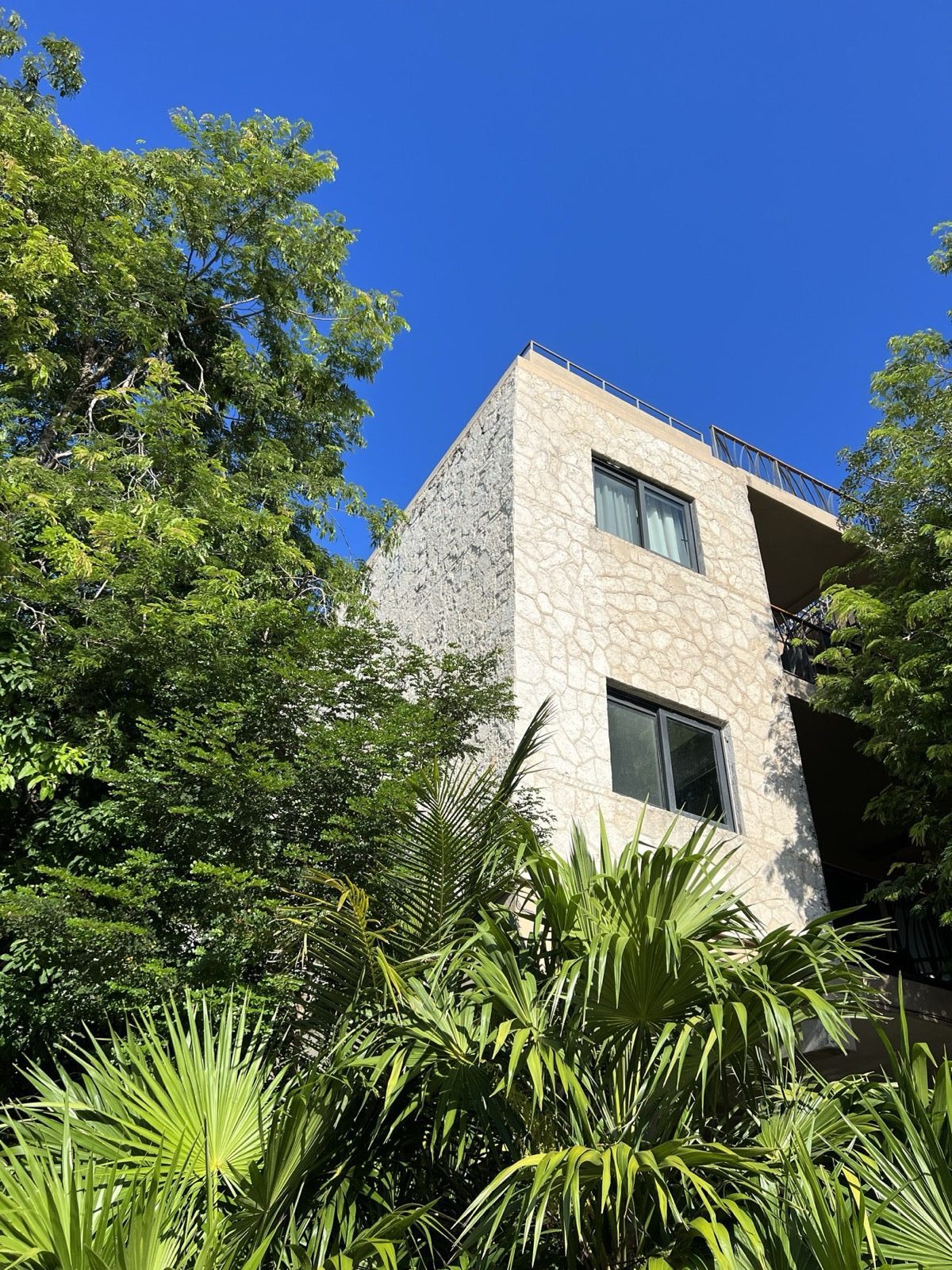
Last year, the owner of a four-bedroom waterfront villa in Miami Beach asked us to take over management from a national platform. The property had been listed for eighteen months. It had a 4.6-star rating. It had generated $187,000 in gross revenue in its first full year — respectable on paper.
When we opened the books, the effective management fee was 41%. The base rate was 28%. On top of that: a linen program surcharge, a hot tub maintenance fee, a deep-cleaning add-on charged quarterly, and a reservation modification fee applied eleven times in twelve months. The owner had not been told about most of these line items individually. They appeared in the monthly statements, buried in a PDF.
The property also had deferred maintenance that would not show up in any financial report. Corroded door hardware from salt exposure, untreated for the full eighteen months. An HVAC filter that had not been changed since the listing went live — in a beachfront market where salt-air infiltration can degrade a system’s efficiency by 15–20% within a single season. Hurricane shutter motors that had never been cycled. When we tested them, two of six were seized.
This is not a story about a bad company. The national platform that managed this property is one of the largest and most recognized in the industry. It is a story about what happens when a management model designed for scale is applied to an asset that requires depth.
The scale model and its economics
National platforms are portfolio companies. Their economics depend on managing the maximum number of properties at the minimum marginal cost per unit. This produces genuine efficiencies — and for many property types, those efficiencies translate directly into owner value.
Vacasa managed approximately 40,000 properties across North America before its 2025 acquisition by Casago. Evolve operates a lighter-touch model across a similarly broad footprint. AvantStay focuses on group-travel properties with a design-forward approach. Each platform offers centralized dynamic pricing, multi-channel distribution across 50+ booking platforms, standardized guest communication, and vendor-network maintenance dispatch. The owner hands over the keys and receives a monthly deposit.
For a cabin in the Smokies, a ski condo in Park City, or a beachside studio in Destin — properties where the operational margin for error is wide and maintenance demands are moderate — this model is well-suited. The difference between good and great management in these markets might be a few hundred dollars per month.
For a $3M villa on a barrier island with a saltwater pool, hurricane exposure, and a $14,000 annual insurance premium, the operational margin for error is not wide. It is narrow enough that the management model itself becomes a variable in the underwriting.
What the Casago-Vacasa deal actually revealed
In December 2024, Casago acquired Vacasa for approximately $130 million. In 2021, Vacasa had been valued at $4.5 billion. That is a 97% decline.
The reasons are specific to Vacasa — an aggressive growth strategy funded by debt, revenue that declined 18% year-over-year heading into the acquisition, and a public-market environment that punished unprofitable growth companies across every sector. This is not an indictment of national platforms as a category.
But the trajectory illustrates a structural tension that extends beyond one company. The national-platform business model requires continuous portfolio growth to cover centralized overhead. More properties, more markets, more vendor contracts, more account managers. When growth stalls or reverses, the overhead remains — and the per-property attention thins.
Under Casago’s franchise model, the Vacasa brand now operates through local franchisees. Service quality, pricing, and responsiveness vary by market and by franchisee. An owner in one market may have an excellent local team. An owner in another may be navigating a transition where the staff they trusted has turned over entirely. The brand is consistent. The experience is not guaranteed to be.
For an owner evaluating management options in 2026, the question is not “is Vacasa good or bad?” It is: “Does a model that optimizes for breadth produce the right outcomes for an asset that requires depth?”
Where the structural gap is widest
Not every operational dimension separates national platforms from local operators equally. Two stand above the rest for coastal and tropical properties.
Storm and hurricane response
A Category 1 hurricane approaching Miami or a tropical storm tracking toward the Yucatán Peninsula requires a specific, time-compressed sequence. Shuttering windows. Securing outdoor furniture and unsecured landscaping. Draining pools to prevent overflow damage. Shutting off water mains. Coordinating with active guests for early checkout or shelter logistics. Removing vehicles from flood-exposure zones. Arranging post-storm inspection and damage documentation before relisting.
The window between a storm watch and the point where preparation must be complete is typically 24–48 hours. This is not a maintenance request. It is a property preservation event that requires pre-positioned vendor relationships, physical proximity to the asset, and authority to make immediate spending decisions.
National platforms execute this through centralized alert protocols. An email goes out. Local teams are activated. The effectiveness depends entirely on the strength and stability of the local team in that specific market — which, under franchise or regional models, changes with turnover. A property in a market where the local Vacasa or Evolve team has operated for five years will be well-served. A property in a market where the team restructured six months ago may not.
Embedded local operators execute storm prep through crews that are already under contract. The shutter company has the property’s shutter specs on file. The arborist has trimmed the same trees for three seasons. The pool technician knows which drain valves stick. The general contractor has a key. None of this requires activation. It requires a phone call.
In our Miami and Tulum portfolios, storm-prep execution averages eleven hours from watch notification to full property secure. That timeline exists because the vendor relationships are pre-built and the decision authority is local. Every hour of delay in coastal storm prep represents exposure — not just to physical damage, but to the insurance documentation gap that emerges when pre-storm property condition was not recorded. Our Tulum short-term rental management team operates this protocol from on-the-ground crews — not a centralized dispatch system that activates a regional vendor.
Maintenance response in high-stakes moments
The AC compressor fails on a Friday evening in July. The guest paid $4,200 for a four-night stay. The property is in Coconut Grove. It is 94 degrees outside.
At a national platform, this generates a work order. The work order enters a ticketing system. The system dispatches to the nearest available vendor in the regional network. The vendor’s availability depends on their existing queue, their geographic coverage, and the priority classification the platform assigns to the request. For a standard property, this system works — maybe a vendor arrives within 24 hours, maybe 48.
For a $4,200 booking, 48 hours is not a response. It is a refund, a one-star review, and a listing-rank penalty that compounds across the next quarter of bookings.
Embedded operators in coastal markets maintain HVAC vendor relationships under standing service contracts. The tech who responds on Friday evening is the same tech who installed the system or serviced it last quarter. They do not need a property briefing. They know the unit model, the ductwork layout, and where the breaker panel is. Average emergency response time in our portfolio across Miami and Tulum is under four hours for critical-system failures. That response time exists because it is contractual, not dispatched.
Where the gap is real but narrower
Pricing calibration
Algorithmic pricing engines optimize for occupancy across a portfolio. They fill calendars. For properties competing in the $150–$300 per night range, the algorithm has thousands of comparable data points and performs well.
For a property competing at $1,200–$3,500 per night, the comparable set is small and the guest psychology is different. The algorithm’s default response to an empty night is to lower the rate. For a villa in this range, that response actively erodes the positioning that justifies the rate in the first place.
A $2,800 villa left empty on a Tuesday in May is not a pricing failure. It is a positioning decision. The algorithm sees a gap. The operator sees a rate floor.
This matters — it can represent tens of thousands of dollars in annual revenue difference — but it is correctable. A sophisticated owner can negotiate rate floors with a national platform. They can override algorithmic suggestions. The structural disadvantage exists but has workarounds.
Turnover standards
A coastal estate turnover is a property inspection, not a cleaning job. Salt air corrodes exterior hardware. Humidity warps wood surfaces. Sand infiltration accelerates HVAC filter degradation. Pool chemistry requires recalibration between every guest stay.
National platforms manage turnover through vendor networks using standardized checklists. The checklist is portable — the same protocol in Gatlinburg and Key Biscayne. That portability is the efficiency and the limitation. A property-specific protocol for a $3M coastal villa includes items no standardized checklist covers: generator fuel level, seawall drainage inspection, hurricane shutter motor cycling, outdoor kitchen gas line verification.
The gap is real but manageable if the owner supplements with their own inspection layer. It becomes a problem when the owner is absentee — which, for high-value coastal properties owned by investors in New York, Toronto, or London, is almost always the case.
The fee arithmetic — and the hidden cost of leaving
National platforms typically quote management fees in the 25–35% range. The effective rate frequently exceeds this. Add-on charges for hot tub maintenance, linen programs, supply restocking, deep cleaning, and reservation modifications push the total cost above 40% in many documented cases. Owner-reported data across review platforms and industry analyses consistently place Vacasa’s all-in effective rate at the high end of the industry range.
The opacity is structural, not malicious. When a platform manages 40,000 properties, standardized pricing tiers are more operationally efficient than custom fee structures. The owner receives a base percentage and discovers the add-ons as they appear.
Local operators typically work within an 18–30% range on an all-in basis. The fee is higher per unit of effort — fewer properties over which to amortize overhead. But the effective cost is often comparable or lower because the add-on layer does not exist.
The more consequential consideration is listing ownership. Some national platforms control the listing — the reviews, the search ranking, the booking history — under their corporate account. When the owner leaves, the listing history stays with the platform. For a property that has accumulated 150+ five-star reviews over three years, losing that history represents a measurable revenue reset. It can take six to twelve months to rebuild the ranking and review velocity that the previous listing had earned.
This is not a minor contractual detail. It is a structural lock-in mechanism that directly affects the owner’s optionality — and it is rarely discussed during the sales process.
The decision framework
The right management model is not determined by a single variable. It is determined by four.
Environmental exposure. Properties in hurricane zones, high-humidity coastal markets, or tropical climates face accelerated maintenance cycles and acute weather events that require pre-positioned response infrastructure. The higher the environmental exposure, the more the embedded model’s proximity advantage matters. A mountain property in Aspen — even at $5M — faces less operational urgency than a $2M property on Key Biscayne.
Regulatory complexity. Markets with active STR regulation (Miami-Dade’s DBPR licensing, Tulum’s fideicomiso structure for foreign owners, evolving HOA restrictions in Houston’s Inner Loop neighborhoods) require local knowledge that centralized compliance teams may not maintain at the market level. If the regulatory environment is simple and stable, the national platform handles it. If it is complex and shifting, local expertise becomes a yield-protection mechanism. Our Houston short-term rental management overview details how absentee owners structure compliance with HOA, deed, and city-level frameworks across River Oaks, Memorial, and the Heights.
Owner proximity. An owner who lives thirty minutes from the property and visits monthly can supplement a national platform’s oversight with their own inspections and vendor relationships. An absentee owner — particularly one in a different country — cannot. The management model must compensate for the owner’s absence. For foreign investors holding Tulum real estate through a fideicomiso, or New York-based investors with a portfolio property in Miami, the embedded operator is not a preference. It is a structural requirement for asset preservation.
Rate tier. Properties competing on volume at $150–$400 per night benefit from algorithmic pricing and multi-channel distribution at scale. Properties competing on rate at $800–$3,500+ per night need pricing strategies calibrated to a small, specific comparable set — and the discipline to leave nights empty rather than erode positioning. The rate tier determines whether the pricing engine should optimize for fill rate or for rate integrity.
When environmental exposure is high, regulatory complexity is elevated, the owner is absentee, and the property competes on rate — the embedded local model is not just better suited. It is the only model that structurally addresses all four variables simultaneously.
When environmental exposure is moderate, regulations are stable, the owner is accessible, and the property competes on volume — the national platform’s scale advantages are real, the efficiencies are genuine, and the model delivers.
The operating expense analysis we published documents how 40–55% of gross revenue in short-term rentals goes to operating costs. In coastal markets specifically, our OpEx benchmarks show that environmental factors compress margins further than inland comparables. These costs exist regardless of management model. But how they are managed — how quickly the compressor is replaced, how proactively the storm prep executes, how rigorously the turnover catches salt damage before it compounds — determines whether the yield gap between short-term and long-term rental strategies closes or holds.
The management model is not a vendor selection. It is a line item in the underwriting. And for a high-value coastal asset, it may be the line item with the widest variance between the best outcome and the worst.