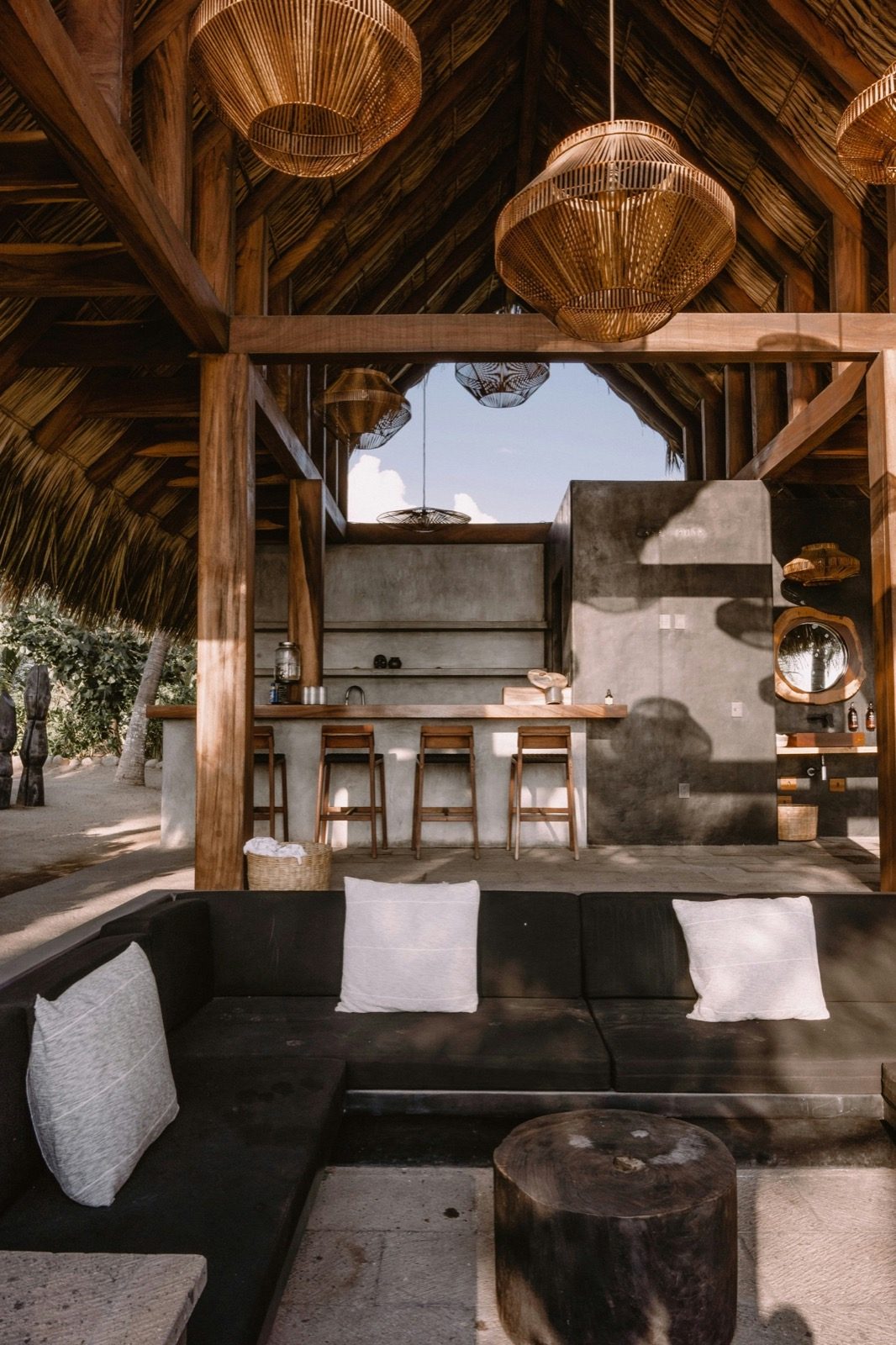
The first thing that registers about Aldea Zamá is the sidewalk. There is one. It runs along both sides of the street, unbroken, paved, separated from the road by a strip of green.
In Tulum, this is unusual. The pueblo doesn’t really have sidewalks. The beach zone doesn’t really have them either — the road narrows into sand and whoever’s walking shares the asphalt with a slow-moving Jeep. But in Aldea Zamá, you can walk from your front door to dinner the way you would in any functional neighborhood in any city, and that small fact shapes what the neighborhood is for.
Aldea Zamá is the part of Tulum that was drawn on paper before it was built. It sits in the corridor between the pueblo and the beach zone, a gated residential community with its own grid, its own commercial center, its own schools, its own order. The jungle has been kept in reserve between the buildings rather than cleared for them. The power comes from proper lines rather than improvised hookups. The water pressure in the shower is the water pressure you would expect in a shower. These are not features a travel guide normally leads with, but in Tulum, they are the difference between a trip that ends well and a trip that ends in a bad review.
The neighborhood has become the default answer for a certain kind of visitor — the kind who came to Tulum once for the beach-zone fantasy and came back wanting the pool, the kitchen, the bedroom that keeps its temperature through the night. The guide that follows is for that visitor, and for the one who hasn’t made the first trip yet and is trying to choose well.
The logic of the place
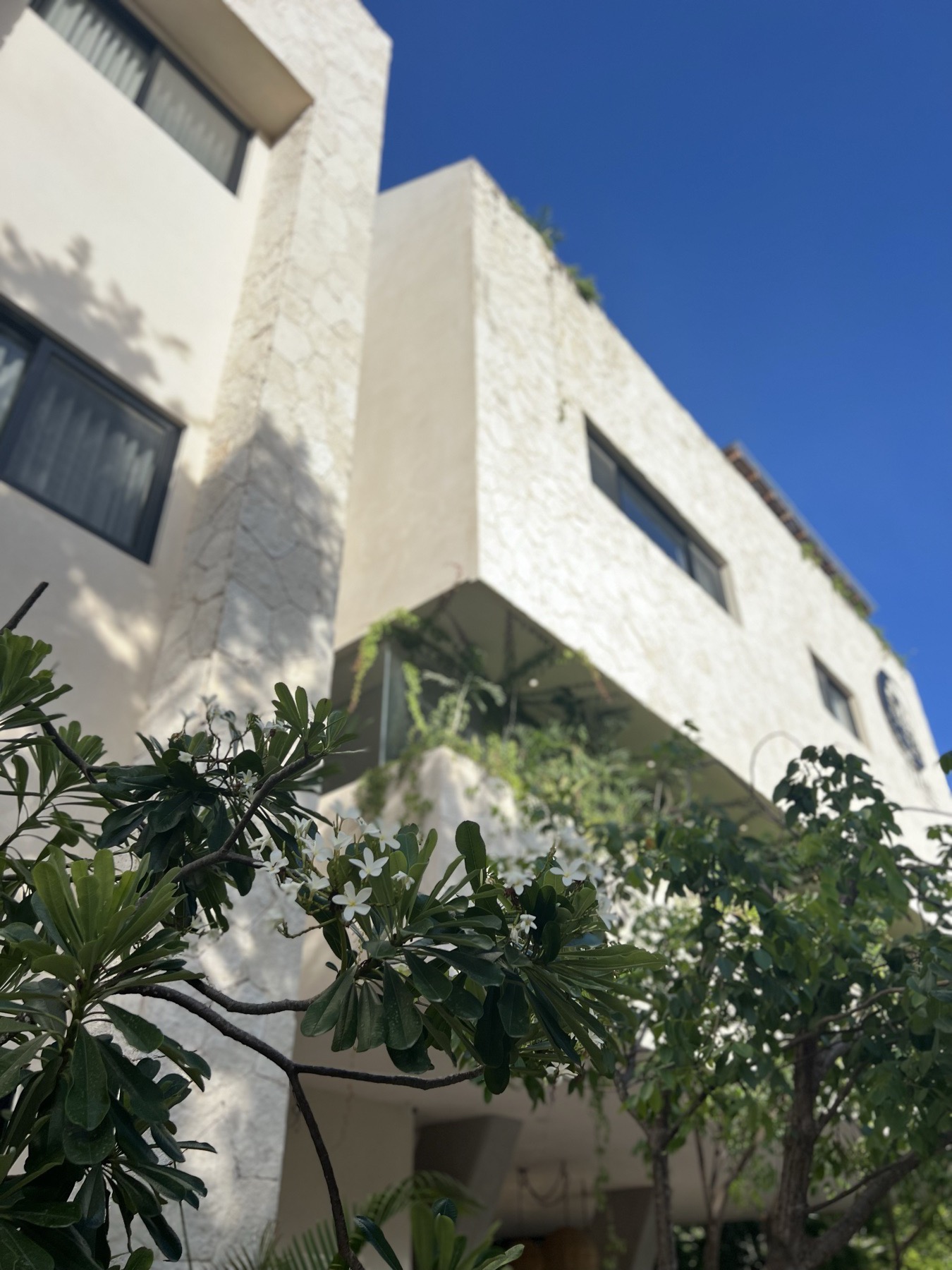
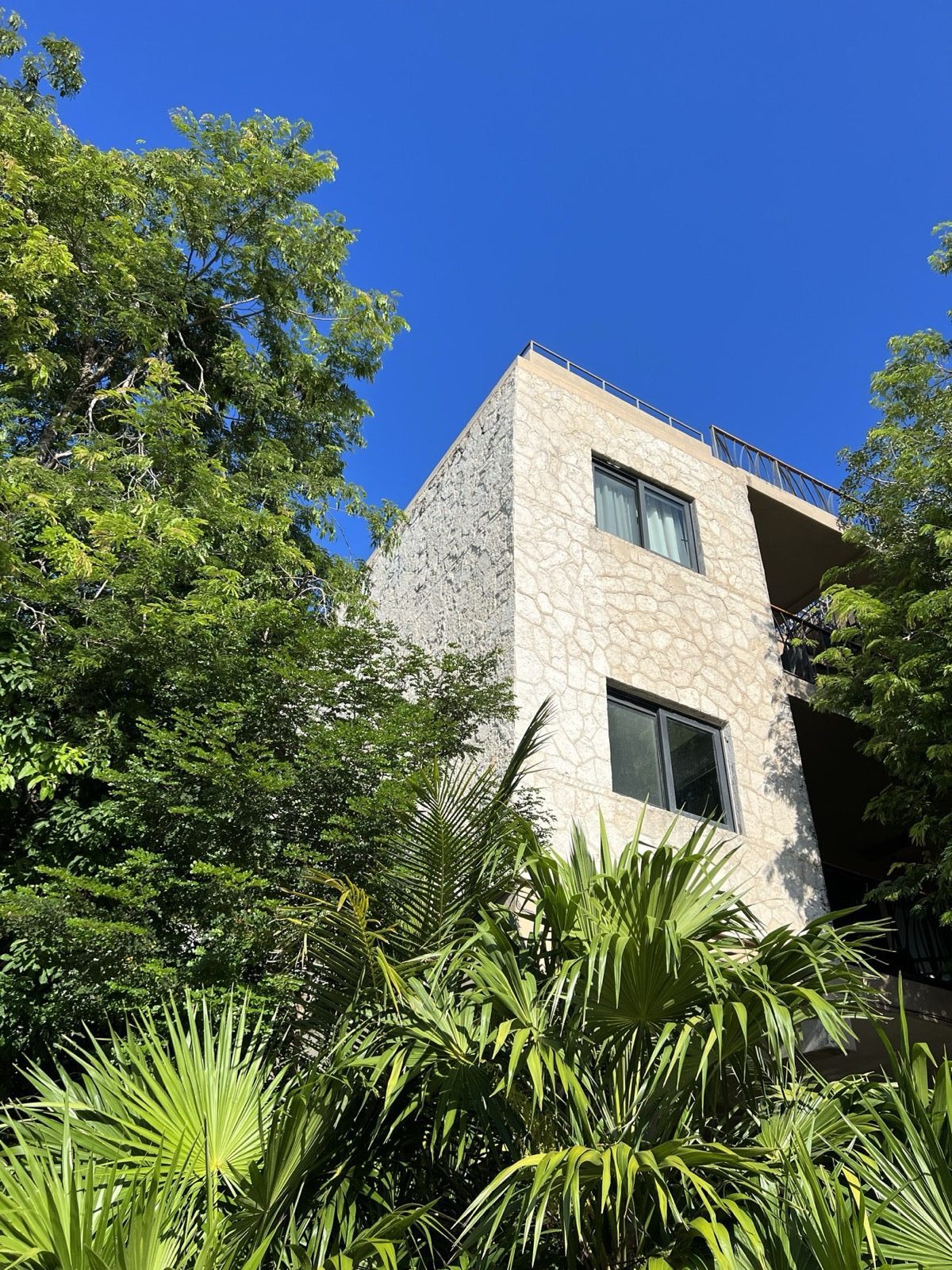
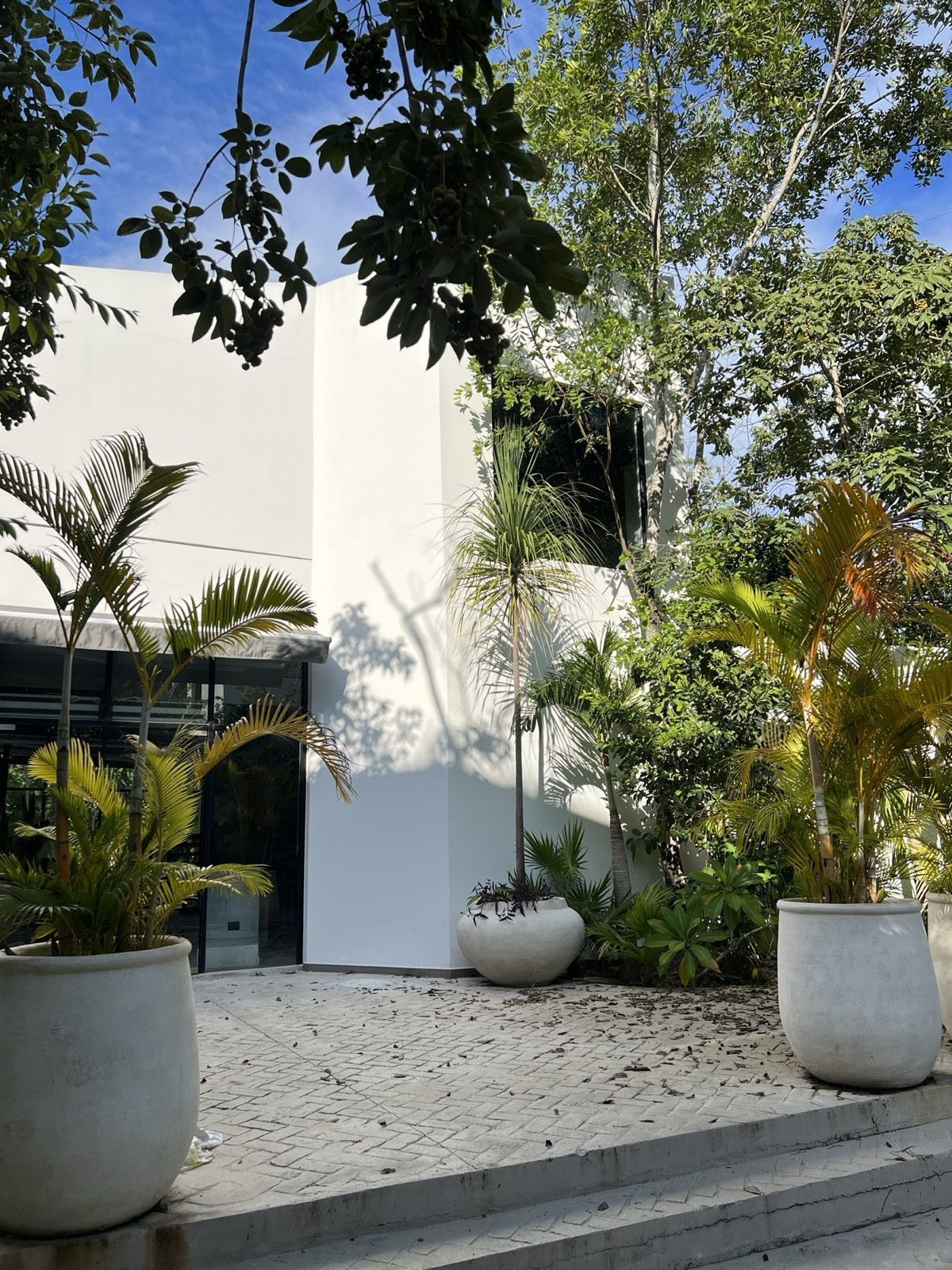
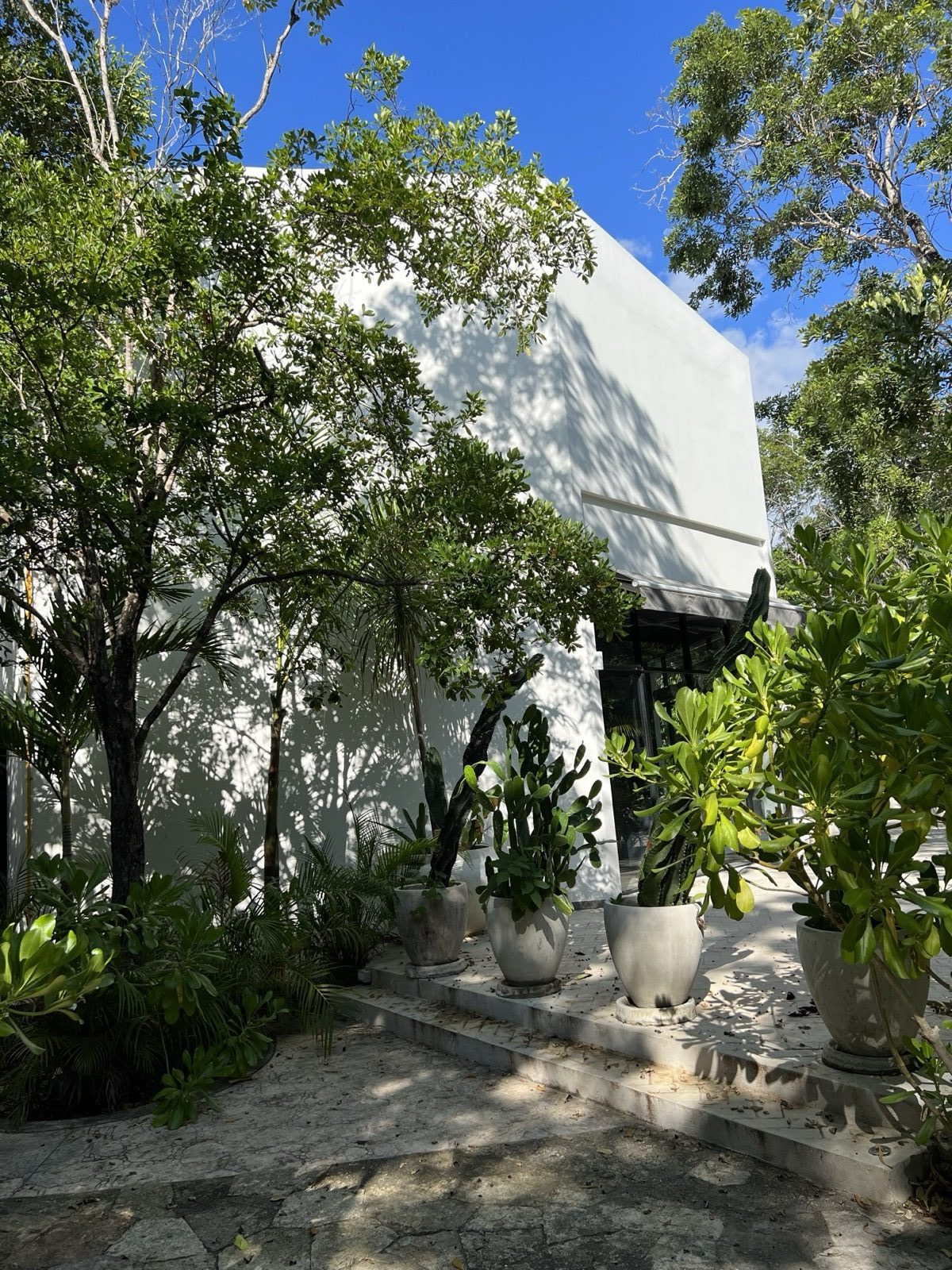
Aldea Zamá is easy to read if you notice what’s been left out. There are no billboards. The streetlights are low and warm rather than fluorescent. Most buildings stop at three or four stories, and even the larger condominium projects hold back from the edge of their lots — setbacks are generous, green buffers consistent. The architectural vocabulary is narrow: limestone, dark wood, flat white stucco, the occasional palapa roof. You can walk for twenty minutes and see variations of the same restrained palette, and after the first block it stops feeling monotonous and starts feeling coherent.
The neighborhood is divided, loosely, into enclaves. The oldest buildings sit in the central grid, around the commercial zone where the restaurants and cafés cluster. To the east, closer to the beach, are the lower-density gated sub-communities — Luum Zama, La Privada, Aldea Premium, Selva Zama — where the villas are larger and the lots deeper into the jungle. To the west, closer to the pueblo, the density rises and the buildings are mostly condos. None of this is signed or obvious from the street. You notice it on the second or third day, when you realize the rhythm of the walks you’ve been taking.
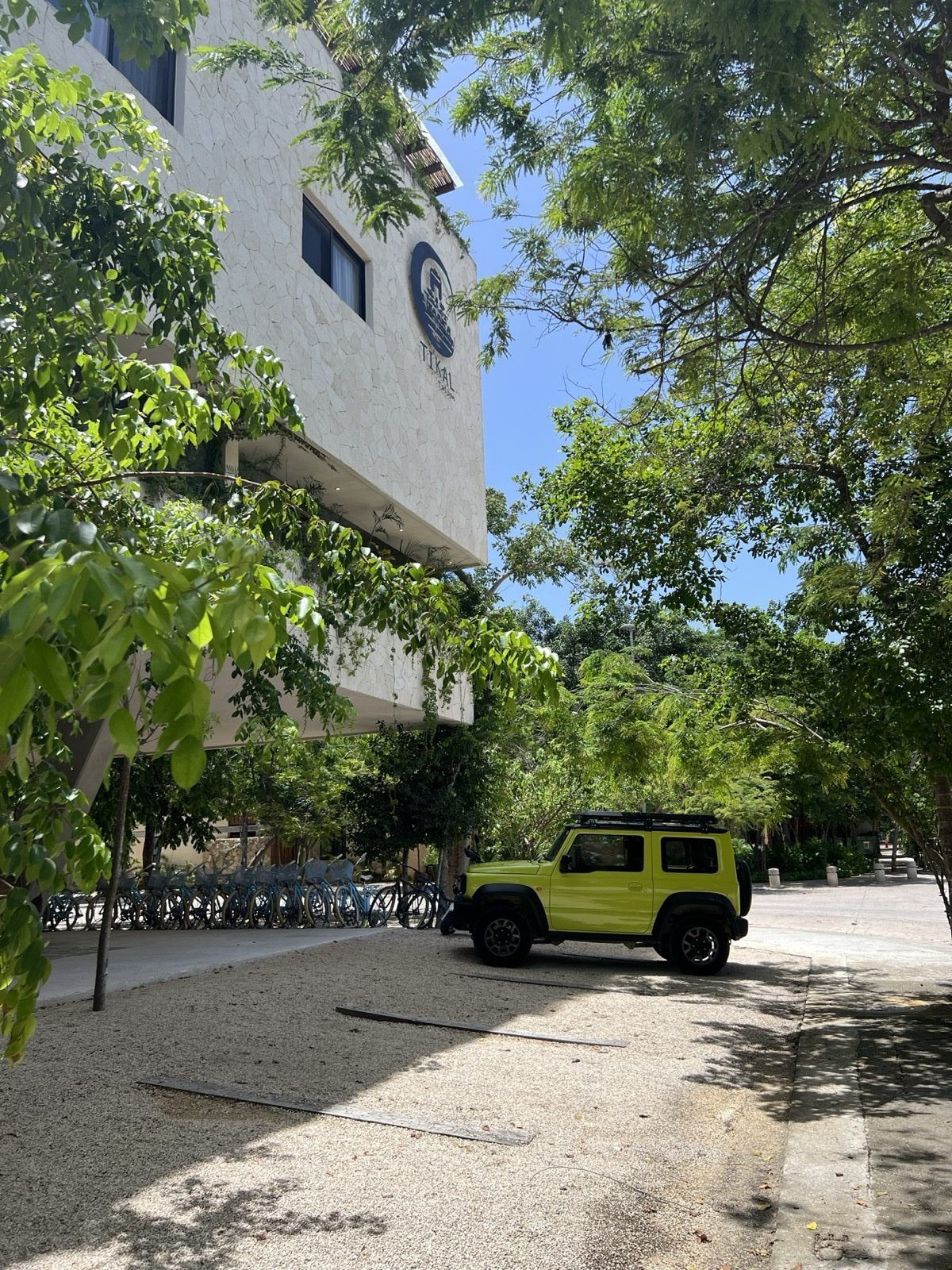
What this design produces, in practice, is a neighborhood that functions. The bike lanes are used. The streets are lit at night. The entrances to each enclave are staffed. The trash is collected. The infrastructure that most of Tulum improvises — generators for power outages, water tanks on rooftops, private security arrangements — is built into the bones of the place rather than layered on top of it. Guests who have stayed in Tulum before usually notice this by the second evening. Guests who haven’t usually only realize it later, when they hear from friends who stayed elsewhere.
Where to eat
Aldea Zamá’s restaurant scene has consolidated in the last two years around the Town Center and the surrounding blocks, which means dinner is, for the first time, a walkable proposition. You can have a drink at one place, dinner at another, and a nightcap at a third without getting in a car.
Mamazul is the one most guests build a night around. The cooking is regional Mexican — mole-driven, vegetable-driven, more Oaxaca than Yucatán — and the agave program runs past three hundred bottles. What makes it worth a reservation is the tasting, walked through by a mezcalier who treats it as education rather than theater. Two hours, four pours, a plate of something smoky and bone-in between the third and the fourth. You leave understanding something you didn’t understand when you arrived.
Xibak is the other anchor. Contemporary Mexican, confident dining room, seafood and prime cuts from a wood-fire kitchen. The rib eye is the tell. The cocktail list is short and it should be — the bar knows what it’s doing and doesn’t need to prove it across forty items. Reservations hold. Service arrives. The bill makes sense. In a town where all three of these things are variable, that consistency is why Xibak has become the easy recommendation.
For a quieter night, Kokoro on the rooftop at Copal Tulum Hotel does the best sushi in Aldea Zamá and arguably in Tulum. The fish arrives daily, the nigiri is cut to match the fish, and the room is sized for ten tables at a time. It’s the meal to book when the trip needs a calmer evening than the week has been giving you.
Ilios, at the northern edge of the neighborhood, pulls the other direction — Greek, festive, generous. Whole fish, a lot of lamb, ouzo that arrives whether or not you ordered it. It is the right choice for a group of six, not the right choice for a Tuesday night alone.
Canova handles Italian in the mid-register — pasta made in-house, a wood-fired oven, a wine list that takes the Mexican producers seriously alongside the Italian ones. It’s the weeknight restaurant, which is a category Tulum almost never builds for.
Just outside the Aldea Zamá perimeter, Safari Comedor belongs on any honest guide to the neighborhood because every guest ends up there. Chef Oscar Cabrera runs it as a fire-and-garden operation, open-air, genuinely good. The tacos at the pass are the reference version. Lunch rather than dinner.
Two honorable mentions. Taquería Honorio, at the pueblo edge, is where the cochinita pibil is made properly — plastic chairs, a tarp, a line at 11 AM, closed by mid-afternoon. It is the meal that reminds you what Tulum is outside of the hotel economy. And Casa Banana, technically over the La Veleta line but close enough to walk, runs the Argentine grill program in town.
The Aldea Zamá dinner clock runs from 7 to 10:30. Kitchens close earlier than a beach town would suggest. If you want to eat at midnight, the beach zone is still where you go. If you want to eat well and be home by eleven, you stay here.
Where to drink coffee
The coffee program in Aldea Zamá is the best argument for staying in the neighborhood for a full week rather than three nights. There are enough serious cafés within walking distance that you can build a real morning routine — a specific place for the first espresso, a different place for the laptop hours, a third for the late afternoon. This matters more than it sounds like it should. A week in Tulum without that rhythm tends to collapse into late mornings and uneven days. A week with it keeps its shape.
Matcha Mama is the most visible of the Aldea Zamá cafés — the matcha program, the cold-pressed juices, the acai bowls that built the brand. The beach-zone original is the one that gets photographed. The Aldea Zamá location is the one that actually works. It opens early and is reliably full by 9:30, which is the correct speed for this kind of place.
La Barra Estelar, in the Town Center, is the one that rewards staying. Proper espresso from a properly calibrated machine, baked goods made on site, a brunch menu that goes past the wellness-café defaults. The back room is quiet and the Wi-Fi is real, which makes it the café for a long morning of work before the day gets hot.
Campanella Cremerie is the Italian counter on the pueblo edge — small, bright, run by people who care. A cappuccino and a cornetto, standing at the bar. Later in the day, a scoop of pistachio. It is the most European thing in Tulum and it takes about six minutes.
Raw Love and The Pitted Date cover the plant-based morning — smoothie bowls, cold-pressed things, breakfast that feels virtuous. Both are right after yoga. Both are wrong before a 7 AM call where you need to sound like a person.
The working routine that most long-stay guests settle into, over a few days, is Campanella for the espresso, La Barra Estelar for the sitting-down work, and Matcha Mama for the late-morning reset. Three cafés, three registers, all within a ten-minute walk. It is the kind of rhythm you cannot build in the beach zone, and it is one of the quiet reasons people extend their stays.
Where to move in the morning
Tulum sells wellness the way Jackson Hole sells skiing, and the serious version of that economy lives in and around Aldea Zamá rather than in the beach-zone studios that cater to the drop-in market.
For studio practice, Yoga Shala Tulum and Maya Tulum, both within a short ride, handle the traditional offering — daily Vinyasa, Yin, and Ashtanga classes, with visiting teachers rotating through the high season. Morning classes are the ones worth targeting. The studios are open-air and by late afternoon the heat compresses the practice in a way the schedule doesn’t warn you about.
Inside the neighborhood proper, Tribal Gym is the gym for guests who actually train. Full racks, dumbbells to a real number, morning classes for those who want structure, day passes for those who don’t. It looks and runs like a mid-sized American gym, which is not what most of Tulum offers. Holistika, just over the line in La Veleta, runs a more developed retreat and studio program and accepts drop-ins when space allows.
For the deeper end of the wellness economy, Yaan Wellness Energy Spa anchors Aldea Zamá’s spa offering. Temazcal ceremonies, sound healing, a water circuit that includes hydrotherapy, cold plunge, and steam. It is a half-day rather than an hour. Booking it as a half-day is the way to get what it’s designed to deliver.
Where to meet the beach
The beach is the other morning option, and it has gotten closer. A dedicated road now connects the eastern edge of Aldea Zamá directly to the beach zone, without routing through the pueblo or the main highway. Quiet, lined with jungle, almost empty most mornings. The ride is ten minutes by bike, six minutes by car, twenty-five minutes by foot if walking is the day’s practice.
The stretch of beach most Aldea Zamá guests end up on is south of Playa Paraíso, where the beach clubs cluster. Casa Malca, the former Escobar property turned art-hotel, runs a beach club with the most photographed pool in Tulum and a day-pass economy that rewards early arrival. Mía Beach Club is quieter and more food-forward. Ziggy’s, the longest-running of the group, keeps the swing-stool bar and the live music in the evenings.
A practical note that most first-time Tulum guests learn the hard way: the sun here is more serious than the latitude suggests. The best beach hours are 7 to 10 AM and 3:30 to sunset. The midday stretch is not where the photographs are taken.
Where to stay
The accommodation in Aldea Zamá divides into three registers, and choosing between them is mostly a question of group size and what the trip is supposed to feel like.
The villa tier is where the neighborhood does its best work — four to six bedrooms, private pool, rooftop, often staffed. These are homes built for groups of eight to twelve, for family gatherings, for smaller weddings, for milestone trips where the house needs to be part of the experience rather than background to it. Open plans, real kitchens, outdoor showers, the kind of detail that rewards a long stay. The better villas in this tier come with a private chef, daily housekeeping, and a concierge built into the rate. The nightly price reflects the staff, the size, and the season, and for the right group the math is more efficient than booking six hotel rooms.
The condo tier is where most of the short-stay inventory sits. One- to three-bedroom units in buildings like Luum Zama, Aldea Premium, Ardeh, and a dozen others, with shared pools, rooftop amenities, and in many cases a shared gym. The well-run buildings feel like serviced apartments. The range across operators is wide, which is why the first filter is less about the building than about how a specific unit is actually run.
The boutique hotel tier is smaller but real. Copal Tulum Hotel and Orchid House are the two most commonly referenced, each operating at a size where the service is delivered by people rather than by a system. For a first visit to Tulum, particularly without a group, a boutique hotel of this scale in Aldea Zamá is often a better trip than a more famous beach-zone address.
There is no full resort in Aldea Zamá. No Rosewood, no Conrad — the Conrad is half an hour north. For guests who want a single-campus resort experience with every amenity on one property, the answer is a different part of the coast. For guests who want a home they can actually live in for a week, with restaurants and coffee and a gym within walking distance, Aldea Zamá is built for exactly that.
The range of what’s available, and what it costs to run well, is the subject of a separate piece — Tulum’s two-speed rental market — which looks at why two villas on the same block, in the same year of construction, can produce four- to five-times different annual returns.
What’s changed recently
The neighborhood that exists today is visibly different from the one that existed two years ago, and the changes matter for how a stay here feels.
The most concrete is the direct beach road, finished and quiet, which has collapsed the distance between the neighborhood and the sand. The old route — the pueblo, the highway, the beach-road traffic — made the beach a planned event. The new route has made it a morning thing.
The second is the airport. Tulum International opened at the end of 2023 and changed the geography of arrival. The ninety-minute drive from Cancún is no longer the default entry. Flights land thirty minutes from the front door of most Aldea Zamá properties, and the effect is that shorter trips now work. Three nights is viable. Midweek is viable. The neighborhood was built for longer stays and it is adapting to shorter ones without losing its character.
The third is the restaurant scene. Two years ago, dinner in Aldea Zamá was adequate. Today, with Mamazul, Xibak, Kokoro, Ilios, and Canova all operating at their current level, eating well within walking distance is no longer a compromise. For guests who have stayed here before, this is the change that registers hardest. The reason to leave the neighborhood at night has largely disappeared.
The fourth is less visible but worth naming. The Maya Train, fully operational since late 2024, now connects Tulum with Cancún, Playa del Carmen, and Mérida. For a stay that extends beyond Tulum — a day in Valladolid, a night in Mérida, a detour to Bacalar — the train has made the peninsula feel reachable in a way that driving it never did.
Aldea Zamá was designed as a residential community at the edge of Tulum. What has happened, in the decade since the first lots were sold, is that the rest of Tulum has moved toward it.
The infrastructure that was quietly built here — sidewalks, bike lanes, paved roads, working utilities — has turned out to be the thing that distinguishes a good stay from a difficult one. The restaurants have caught up. The cafés have settled into their rhythm. The beach is closer than it used to be.
For a first visit to Tulum, it is the neighborhood to choose. For a return visit, it is usually the neighborhood people come back to.
Virestia operates a selective portfolio of residences in Aldea Zamá, Tulum. Explore our Tulum collection or speak with us directly about your next stay.